Pope
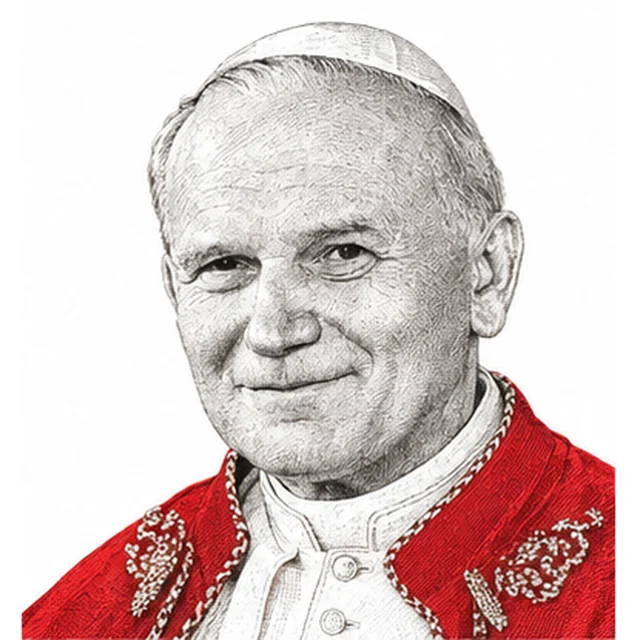
John Paul II
Karol Wojtyła, elected as John Paul II, was pope from 1978 to 2005, becoming the first Polish pontiff and first non-Italian since 455 years. John Paul II's pontificate, one of the longest in history, was marked by his role in the fall of communism, his numerous travels (129 countries visited), his commitment to interreligious dialogue and a firm defense of traditional moral doctrine. His charismatic personality and ability to communicate with crowds redefined the modern papacy.
- Regnal name
- John Paul II
- Birth name
- Karol Wojtyła
- Born
- 18 May 1920
- Elected
- 16 October 1978 (58 years)
- End of pontificate
- 2 April 2005
- Died
- 2 April 2005 (84 years)
- Length of pontificate
- 26 years and 5 months
Career
- 1958Titular bishop
- 1958 – 1964Auxiliary bishop
- 1958 – 1964Titular bishop
- 1964 – 1978Archbishop of Kraków
- 1967 – 2005San Cesareo in Palatio
- 1969 – 1978Vice-President of the Polish Episcopal Conference
- 1978 – 2005Pope
- Episcopal consecration
- 4 July 1958
- Consecrators
- Eugeniusz Baziak
- Languages spoken
- Belarusian, English, Esperanto, French, German, Italian, Latin, Lithuanian, Polish, Portuguese, Russian, Spanish
Positions on six themes
How are these scores established?Each theme is scored from 0 (very progressive) to 10 (very conservative). The overall score, out of 100, weights the six themes.
Magisterium
Encyclicals14
- Redemptor Hominis (4 March 1979)
- Dives in Misericordia (30 November 1980)
- Laborem Exercens (14 September 1981)
- Slavorum Apostoli (2 June 1985)
- Dominum et vivificantem (18 May 1986)
- Redemptoris Mater (25 March 1987)
- Sollicitudo Rei Socialis (30 December 1987)
- Redemptoris Missio (7 December 1990)
- Centesimus Annus (1 May 1991)
- Veritatis Splendor (6 August 1993)
- Evangelium Vitae (25 March 1995)
- Ut Unum Sint (25 May 1995)
- Fides et Ratio (14 September 1998)
- Ecclesia de Eucharistia (17 April 2003)
Apostolic exhortations15
- Catechesi Tradendae (October 16, 1979)
- Familiaris Consortio (November 22, 1981)
- Redemptionis Donum (March 25, 1984)
- Reconciliatio et Paenitentia (December 2, 1984)
- Christifideles Laici (December 30, 1988)
- Redemptoris Custos (August 15, 1989)
- Pastores Dabo Vobis (March 15, 1992)
- Ecclesia in Africa (September 14, 1995)
- Vita Consecrata (March 25, 1996)
- LebanonIT
- Ecclesia in America (January 22, 1999)
- Ecclesia in Asia (November 6, 1999)
- Ecclesia in Oceania (November 22, 2001)
- Ecclesia in Europa (June 28, 2003)
- Pastores gregis (October 16, 2003)
Apostolic constitutions12
- Sapientia Christiana (April 15, 1979)
- Scripturarum Thesaurus (April 25, 1979)
- Magnum Matrimonii SacramentumIT
- Divinus Perfectionis Magister (January 25, 1983)
- Sacrae Disciplinae Leges (January 25, 1983)
- Spirituali Militum CuraeIT
- Pastor Bonus (June 28, 1988)
- Basilica San NicolaIT
- Ex Corde Ecclesiae (August 15, 1990)
- Fidei Depositum (October 11, 1992)
- Universi Dominici Gregis (February 22, 1996)
- Ecclesia In UrbeIT
Motu proprio28
- Notre Dame JerusalemFR
- Familia A Deo InstitutaIT
- Apostolic Letter in the form of Motu Proprio Tredecim Anni (August 6, 1982)
- Pontificia CommissioneIT
- Dolentium Hominum (February 11, 1985)
- Quo Civium IuraIT
- Sollicita CuraIT
- Decessores NostriIT
- Iusti IudicisIT
- Ecclesia Dei (July 2, 1988)
- UlsaIT
- Preservaz FedeIT
- La PreoccupazioneIT
- Europae OrientalisIT
- Inde a Pontificatus (March 25, 1993)
- Socialium ScientiarumIT
- Vitae MysteriumIT
- Labour OfficeIT
- Ad Tuendam Fidem (18 May 1998)
- Apostolos Suos (May 21, 1998)
- Stella Maris (January 31, 1997)
- Spes Aedificandi - Proclamation of the Co-Patronesses of Europe (October 1, 1999)
- E sancti Thomae Mori - Apostolic Letter in the form of a Motu Proprio (October 31, 2000)
- Legge Fondamentale ScvIT
- Sacramentorum sanctitatis tutela - Apostolic Letter in the form of a Motu Proprio (April 30, 2001)
- Apostolic Letter in the form of Motu Proprio Misericordia Dei on certain aspects of the celebration of the Sacrament of Penance (April 7, 2002)
- Fondo PensioniIT
- Legionaries JerusalemIT