Elector
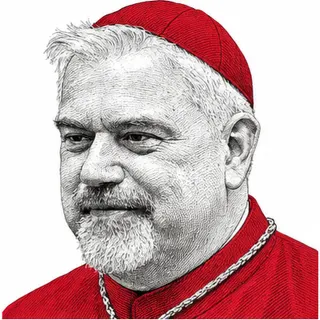
Giuseppe Betori
Italian cardinal, Archbishop of Florence, known for his conservative doctrinal positions and intellectual work, while remaining engaged in pastoral dialogue.
- Country
- Italy
- Born
- 25 February 1947 (79 years)
- Created cardinal
- by Benedict XVI, on 18 February 2012
- Status
- Elector · Elector until 25 February 2027
Overall position 42/100 · Moderately progressive
Positions on six themes
How are these scores established?Each theme is scored from 0 (very progressive) to 10 (very conservative). The overall score, out of 100, weights the six themes.
-
Moral doctrine · 25 %
5/10Cardinal Betori has defended Catholic teaching on life, calling its defence a 'scandal' for today's mentality (2023), and spoke out against Italy's civil unions bill in 2015. Yet in January 2024 he publicly backed Fiducia supplicans, presenting blessings as a pastoral response to human fragility that does not change the doctrine of marriage, and in February 2024 he set up a diocesan coordination to welcome and accompany LGBT people and their families.
Sources (4)
- Benedizione di coppie "irregolari", Betori: l'amore di Dio è un'esperienza per tutti — Avvenire, 2024-01-14
- La Chiesa fiorentina istituisce il coordinamento per la pastorale di inclusione — La Nazione, 2024-02-01
- Betori: la difesa della vita umana, scandalo per la mentalità di oggi — Avvenire, 2023-11-04
- Unioni civili, Betori: diremo la nostra — Avvenire, 2015-03-27
-
Liturgy and tradition · 20 %
5/10A biblical scholar, Cardinal Betori followed the Italian bishops' new translation of the Bible and Roman Missal, including the revised Our Father, and welcomed Pope Francis raising the issue. In 2020 he introduced the new Missal in Florence, urging priests to preside with faithful adherence to its texts and gestures. He has not taken a public position on the traditional Latin Mass.
-
Socio-political engagement · 15 %
3/10Cardinal Betori has repeatedly raised migrant reception, prisons, persistent poverty and the housing emergency, as in his 2023 New Year's Te Deum, and called for joint solutions in the ex-GKN factory crisis. He presents Florence's tradition as uniting high culture with care for the weak, while defending the Church's right to speak in public debate.
-
Stance on Francis's reforms · 20 %
4/10Formerly secretary general of the Italian Bishops' Conference under Cardinal Ruini, Betori nonetheless implemented Pope Francis's orientations in Florence, defending Fiducia supplicans and launching an LGBT inclusion ministry presented as following the Pope's teaching. He hosted Francis in Florence in 2015 and has made no public criticism of the pontificate; in 2025 he described the conclave as seeking convergence, not a clash of factions.
Sources (3)
- Argentine archbishop criticizes cardinals who back Fiducia Supplicans — Catholic World Report (CNA), 2024-02-05
- La Chiesa fiorentina istituisce il coordinamento per la pastorale di inclusione — La Nazione, 2024-02-01
- Il Conclave dei cardinali toscani: "Convergenza di tutte le attese" — La Nazione, 2025-05-10
-
Interreligious dialogue · 10 %
2/10Cardinal Betori has supported interreligious cooperation in Florence. He opened the 2019 Christian-Muslim 'Day of Fraternity' at Santa Croce and in 2023 welcomed the new site for the city's mosque, speaking of a 'long and sincere friendship' with the Islamic community and saying the Church of Florence shared in its joy.
-
Communication and pastoral style · 10 %
5/10Cardinal Betori's style is that of a scholar and former bishops' conference official: lengthy, closely argued homilies drawing on authors such as de Lubac or Habermas, and a presence mainly in the Catholic and Florentine press. He joked at his farewell in 2024 that his homily would exceed the eight minutes requested by Pope Francis.
Career
- 2001 – 2008General secretary
- 2001 – 2008Titular bishop
- 2008 – 2024Roman Catholic Archbishop of Florence
- since 2012Cardinal priest
- Episcopal consecration
- 5 April 2001
- Consecrators
- Antonio Buoncristiani, Arduino Bertoldo, Camillo Ruini, Ennio Antonelli, Giovanni Benedetti
- Languages spoken
- Italian