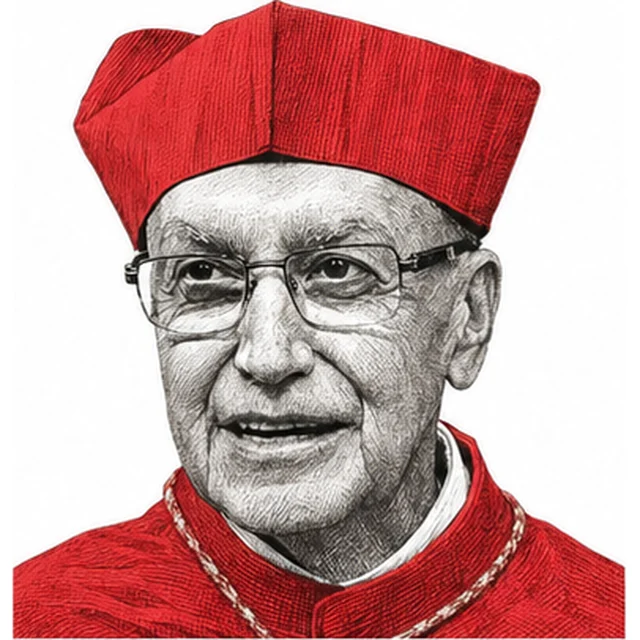
Elector
Carlos Castillo Mattasoglio
Peruvian cardinal, liberation theologian, known for his progressive positions, social commitment, and closeness to Pope Francis.
- Country
- Peru
- Born
- 28 February 1950 (76 years)
- Created cardinal
- by Francis, on 7 December 2024
- Status
- Elector · Elector until 28 February 2030
Overall position 25/100 · Progressive
Positions on six themes
How are these scores established?Each theme is scored from 0 (very progressive) to 10 (very conservative). The overall score, out of 100, weights the six themes.
-
Moral doctrine · 25 %
3/10Cardinal Castillo welcomed Fiducia supplicans in December 2023, stressing pastoral 'creativity' and saying that in his community 'everyone is blessed, because it is God's grace'. A theologian close to Gustavo Gutiérrez, he favours a pastoral, inclusive approach; some of his theological statements, such as describing Jesus as dying 'as a layman', have been criticised by conservative Catholic media. He has not publicly called for changes to moral doctrine.
-
Liturgy and tradition · 20 %
3/10Cardinal Castillo has not taken a public position on the traditional Latin Mass. His reforming outlook is mainly ecclesiological: in 2021 he proposed entrusting parishes to lay people and married couples in the name of synodality, and in his 2026 synodal message he said that a Church that does not reform with the times becomes foreign to the world, a statement criticised by traditionalist commentators.
-
Socio-political engagement · 15 %
1/10Cardinal Castillo is one of the most outspoken critics of Peru's political class. In his July 2025 Te Deum homily, in front of President Dina Boluarte, he denounced a 'mafia spirit' among leaders and authoritarian attitudes, and in September 2025 he backed street protests and urged the authorities not to treat young demonstrators as terrorists. He consistently speaks out on corruption, insecurity and the poor.
Sources (2)
-
Stance on Francis's reforms · 20 %
2/10Appointed Archbishop of Lima and created cardinal in December 2024 by Pope Francis, Cardinal Castillo has strongly promoted synodality and Francis's critique of clericalism. In October 2024 he called for the suppression of the Sodalitium Christianae Vitae, whose members Francis had begun expelling, and in April 2026 he expressed 'complete solidarity' with Pope Leo XIV.
Sources (3)
- Lima archbishop says movement with U.S. ties should be suppressed — Catholic Review / CNS, 2024-10-22
- "Em um mundo desesperado, o Evangelho é poesia." Entrevista com Carlos Castillo, arcebispo de Lima — IHU Unisinos / Agência SIR, 2022-09-13
- Arzobispo de Lima apoya al papa León XIV y rechaza críticas de Donald Trump — Infobae, 2026-04-13
-
Interreligious dialogue · 10 %
4/10No significant interreligious or ecumenical initiative by Cardinal Castillo has been found. In a 2022 interview he described the growth of evangelical and Pentecostal churches as competition for Catholicism and criticised the individualism of the 'prosperity gospel', while emphasising openness to the other in general terms.
-
Communication and pastoral style · 10 %
2/10Cardinal Castillo has an unconventional, poetic and media-friendly style, drawing on poets and philosophers such as Neruda and Lévinas. His Sunday and national-holiday homilies are widely reported in the Peruvian press, often for their direct criticism of the authorities.
Sources (2)
- "Em um mundo desesperado, o Evangelho é poesia." Entrevista com Carlos Castillo, arcebispo de Lima — IHU Unisinos / Agência SIR, 2022-09-13
- Monseñor frente a Dina Boluarte: 'Gobernar no es frivolizar (...) La actitud dictatorial y mandona viene de personas sin vocación entrañable' — Diario Correo, 2025-07-28
Career
- since 2019Roman Catholic Archbishop of Lima
- since 2024Grand Chancellor
- since 2024Cardinal priest
- … – 2019Grand Chancellor
- Episcopal consecration
- 25 January 2019
- Consecrators
- Juan Luis Cipriani Thorne, Luis Armando Bambarén Gastelumendi, Miguel Cabrejos Vidarte, Nicola Girasoli, Pedro Ricardo Barreto Jimeno
- Languages spoken
- Spanish